
Arthur, Illinois · Epoxy & Resin Floors
Seamless Epoxy Floors
Built for Work
Commercial, industrial and residential floor coatings from Arthur, IL, serving Douglas, Moultrie, Coles, Champaign, Macon and the surrounding counties.
Floors for working buildings
SEAMLESS
No grout lines. No seams for dirt, water or bacteria. A cove base sweeps the floor up the wall. One continuous, sealed surface built for the traffic it takes.
Seamless and easy to clean
No grout lines, cove base sweeps the floor up the wall so there's no seam for dirt and water.
Built for traffic
Shops, warehouses, ag buildings, garages — floors that take forklifts, hot tires and daily wear.
New pour or old slab
New construction and existing concrete. We prep, repair and coat both.
Get Started
Tell us about your floor
Rough square feet, building type, timeline — we'll walk you through the rest.
What we install
Floor coating systems
Commercial Epoxy Flooring
High-build epoxy systems for retail, office, restaurant and showroom floors that take daily traffic and still look sharp.
Industrial Floor Coatings
Heavy-duty resin coatings engineered for warehouses, plants, ag facilities and loading docks that endure forklifts, chemicals and hot tires.
Epoxy Cove Base & Wall Coatings
Seamless cove base that sweeps the floor up the wall — no joint for dirt, water or bacteria to hide in commercial and processing spaces.
New Construction Floor Coatings
Coating systems scheduled into the build sequence so the slab is protected and ready for service on move-in day.
Garage Floor Coatings
Decorative flake and solid epoxy garage floors that resist oil, salt and hot tires — and make the space usable again.
Basement Floor Coatings
Moisture-tolerant epoxy and flake systems that turn a bare concrete basement into a clean, bright, usable floor.
Stair & Step Coatings
Skid-resistant flake coatings for basement stairs, entry steps and porches that hold up to foot traffic and weather.
What kind of space are you coating?
How to choose the right floor coating
The right floor coating depends on the building, the traffic, and what the floor has to resist. A warehouse aisle with forklifts needs a heavier system than an office hallway. A restaurant kitchen needs a cove base so water cannot collect where the floor meets the wall. A new build can be coated before move-in so the slab starts its life sealed. An existing floor gets mechanically prepped so the new coating bonds permanently.
Our finder walks you through those four questions and points you to the system that fits — commercial epoxy, industrial coatings, cove base, new construction, garage, basement or stairs. You can read the matched service page, ask about a cove base, or send your answers straight to us for a quote.
Real results
Before & after
Basement floor
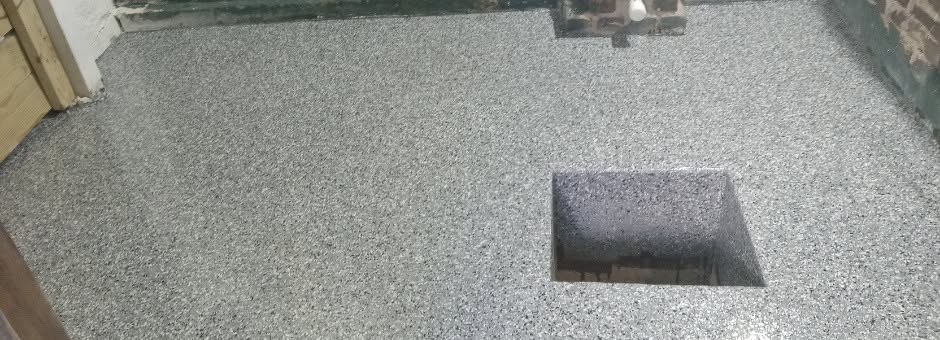
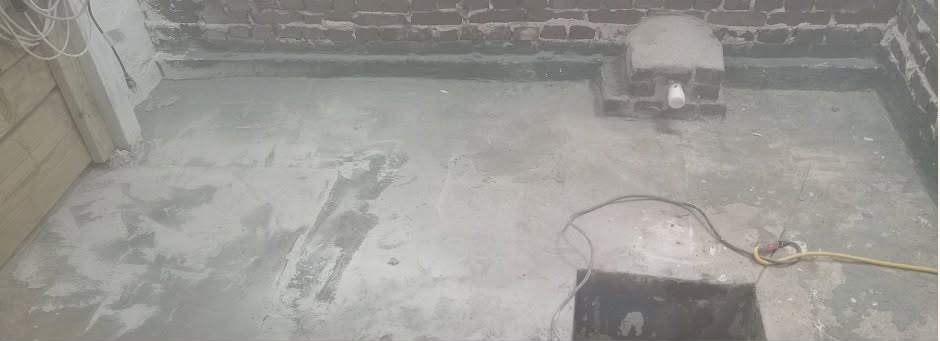
Basement stairs
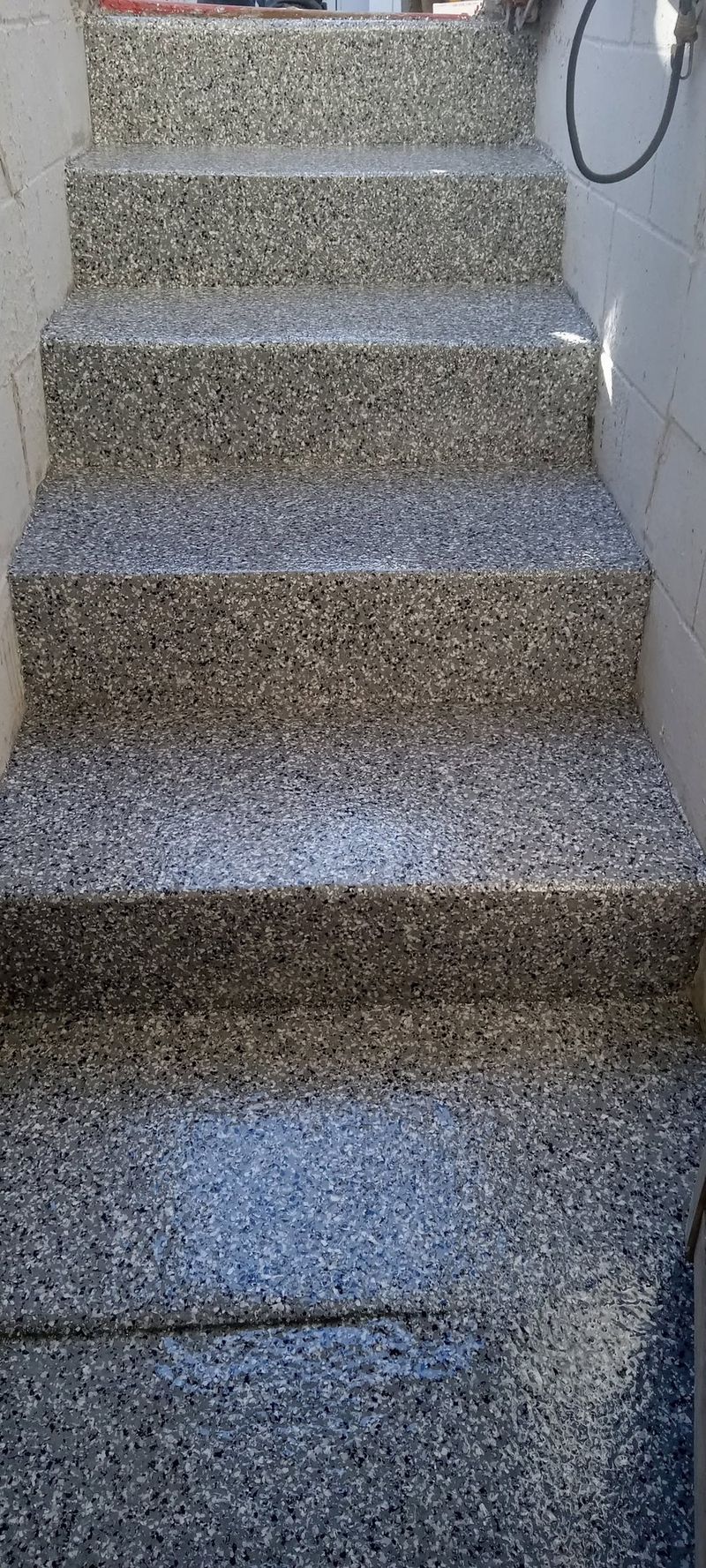
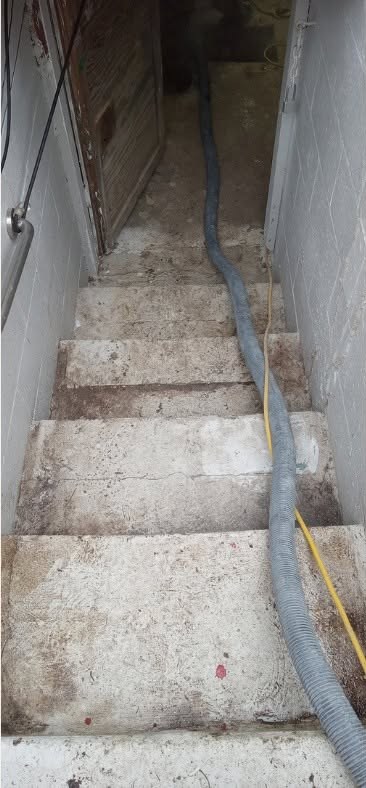
How it works
How a coating goes down
Look at the floor and talk through the job
We walk the space, assess the concrete, listen to what the floor needs to do for you, and recommend the right system and build.
Prep the concrete
We mechanically grind or shot-blast the surface, repair cracks and spalls, and remove old coatings or contaminants so the resin bonds permanently.
Base coat
The base coat goes down first, establishing the bond to the concrete and building the thickness that carries the wear.
Flake or finish
For flake systems we broadcast colored chips into the wet base. For solid systems we apply the pigmented finish coat.
Topcoat
A clear, durable topcoat seals the system, adds gloss or matte finish, and protects the color and flake underneath.
Back in use
After the cure window the floor is ready for foot traffic, vehicles and daily use — clean, sealed and built to last.
Got a shop, warehouse or plant floor that needs work?
Larger commercial and industrial projects beyond 50 miles: call to talk it through.
Who we help
Floors for every kind of building
Commercial Buildings
Retail stores, offices, restaurants, showrooms and medical spaces need a floor that holds up to daily foot traffic and still looks sharp for customers and staff. We install high-build epoxy systems that seal the concrete, resist scuffs and spills, and wipe clean at the end of the day. Epoxy cove base sweeps the floor up the wall so there is no joint where dirt and water collect — a real advantage in restaurants, clinics and food-prep areas where sanitation matters. Whether it is a showroom that has to impress, an office that sees heavy foot traffic, or a retail space that takes carts and cleaning chemicals, we match the resin and the build to the work the floor has to do.
Industrial Facilities
Warehouses, manufacturing plants, distribution centers and processing facilities take a different kind of punishment — forklifts, pallet jacks, heavy equipment, chemical spills and hot tires. We install heavy-duty resin coatings engineered for that load, with the build thickness and the resin hardness matched to the traffic. A warehouse aisle that sees forklifts all day needs a harder, thicker system than a light-traffic office. A processing floor that gets hosed down every night needs a coating that tolerates moisture and chemical cleaning. We read the floor, talk through the chemicals and the loads, and specify the right system — then schedule the work around your production so only part of the floor is out of service at a time.
Agricultural Buildings & Shops
Farm shops, machinery sheds, grain facilities and ag buildings work in some of the harshest conditions a floor sees — oil, fuel, fertilizer, hydraulic fluid and heavy equipment rolling in and out. A bare concrete floor absorbs all of it, stains deep, and gets harder to clean every season. An epoxy or resin coating seals the concrete so spills wipe up, the surface resists the chemicals ag work throws at it, and the floor holds up to tractors, implements and trucks. We install systems built for the load — heavier builds for equipment traffic, skid-resistant finishes where foot and tire traffic mix, and resins that tolerate the oils and fuels a working shop runs on every day.
Builders & General Contractors
General contractors and builders running new construction can save the slab by scheduling the coating into the build sequence. Once the concrete is poured and cured, we coat it before fixtures, shelving and equipment move in — so the floor starts its life sealed, clean and ready for service on move-in day. That protects the slab from construction traffic, staining and damage during the rest of the build, and the owner moves in to a finished floor instead of bare concrete. We coordinate with your schedule so the coating goes down at the right point in the sequence — after the slab is ready, before the space is filled — and we work around the trades on site.
Homeowners
Garages, basements, stairs and porches deserve the same bond and the same prep as a warehouse floor. A garage floor takes hot tires, oil drips, road salt and snow-melt every winter; a basement floor deals with moisture, humidity and the wear of daily use; stairs and entry steps take foot traffic and weather. We install decorative flake and solid epoxy systems that seal the concrete, resist staining and moisture, and turn a rough, dusty slab into a clean, bright, usable space. The same prep — grinding, crack repair, moisture testing — goes into a residential floor as a commercial one, because a bond that lasts is what makes any floor worth doing.
What customers say
They did an amazing job on my garage floor. I am getting a quote from them now on my back patio.
Where we work
Central Illinois service area
DOUGLAS COUNTY
MOULTRIE COUNTY
PIATT COUNTY
MACON COUNTY
EDGAR COUNTY
COLES COUNTY
SHELBY COUNTY
EFFINGHAM COUNTY
Common questions
FAQ
How long does a commercial epoxy floor last?+
A properly installed epoxy system in a commercial or industrial setting typically serves for many years under normal traffic. with periodic cleaning and recoating of high-wear areas extending the life further. The exact lifespan depends on traffic volume, chemical exposure and the system selected.
Can you coat over an existing coated floor?+
In many cases yes, if the existing coating is sound and well bonded we can scarify and recoat. If the old coating is failing we remove it down to bare concrete first. We assess every floor before quoting.
Do you work around our production schedule?+
Yes. For plants and facilities we schedule coating work during shutdowns, off-hours or weekends to keep your operation running. Larger projects can be phased so only part of the floor is out of service at a time.
What about chemical and oil resistance?+
Our industrial systems are selected for the chemicals present in your facility — oils, solvents, acids, alkalis and food-grade cleaners. We match the resin to the exposure.
Can epoxy handle forklift traffic?+
Yes. Our industrial-grade systems are built for forklift and heavy equipment traffic, with the build thickness and resin hardness matched to the load.
How long does a garage floor coating take?+
A typical residential garage floor is completed in one to two days depending on prep, system and square footage. with light foot traffic the next day and full vehicle traffic after the cure window.
Will the coating peel or yellow?+
Proper surface preparation is the single biggest factor in preventing peeling. We mechanically prep every floor. Yellowing is minimal with our UV-stable topcoats and indoor installations.
Can you fix a cracked concrete floor?+
We repair cracks and spalls as part of preparation before coating. Hairline cracks are bridged by the resin; wider cracks are routed, filled and sealed so they do not telegraph through the coating.
Ready for a floor that works as hard as you do?
Tell us about your floor and we'll walk you through the rest.