
Stair & Step Coatings
in Arthur, IL
Skid-resistant flake coatings for basement stairs, entry steps, porches, and commercial stairwells — treads, risers, and edges sealed against wear, weather, and foot traffic.
Stair & Step Coatings
Stairs take a different kind of wear than a floor. Every step is a concentrated load — the heel of a foot, the edge of a shoe, the corner of a boot — hitting the same spot over and over. A bare concrete step wears down at the nosing, chips at the edges, and gets slick when it is wet. A coated stair takes that same traffic and gives it grip, a sealed surface, and a finished look that carries from the floor up the steps and onto the landing.
A stair and step coating is a flake epoxy system applied to properly prepared concrete treads, risers, and edges. The base coat bonds to the concrete, the flake broadcast gives the surface texture and color and hides the small chips and wear every stair carries, and a skid-resistant topcoat seals it and adds grip. The result is a stair that wipes clean, reads finished, and holds up to foot traffic and weather — a basement walkout, an entry step, a porch landing, or a commercial stairwell.
We coat the whole stair — tread, riser, and the edge — as one continuous surface. The nosing gets the most wear, so it gets the most build. The riser ties into the tread so there is no raw concrete edge to chip. The edge of the step is sealed so water and salt do not get in and break the concrete down. For a commercial stairwell, we can carry the flake system across the landing and tie it into the floor coating at the top and the bottom. For a basement walkout, we seal the bottom step against the slab and the top step against the threshold.
Request a quote
Tell us about your floor
Signs it's time
When Stairs Need a Coating
The nosing is wearing down
The front edge of the step takes the most wear and is the first place bare concrete breaks down. A coated tread seals the nosing and stops the wear.
Steps are slick when wet
Bare concrete and worn paint get slippery in rain, snow, and spill. A skid-resistant flake topcoat adds grip where foot traffic and moisture mix.
The edges are chipping
The raw concrete edge of a step chips and spalls under foot traffic and weather. A sealed edge stops the damage and keeps the step solid.
The stairs look unfinished
Bare or painted concrete stairs read rough and neglected. A flake system gives the whole stairwell a finished, clean look that ties into the floor.
Salt and weather are breaking them down
Entry steps and porches take road salt, freeze-thaw, and rain, A sealed coating sheds the melt instead of letting it eat the concrete.
You are coating the floor anyway
If the basement or garage floor is getting coated, the stairs that lead to it should match, We tie the stair coating into the floor system for one continuous surface.
How the job goes
How a Stair Coating Goes Down
Look at the stairs and talk through the job
We look at the treads, risers, edges, and the landing, and talk through where the stairs sit, the traffic they take, and the weather they see. Then we plan the system.
Prep the concrete
We mechanically grind the treads, risers, and edges to open the pores, repair chips and spalls, and remove old paint or coatings so the resin bonds to open concrete.
Base coat
The base coat goes down on the treads, risers, and edges, bonding to the concrete and building the thickness that carries foot traffic and weather.
Flake broadcast
We broadcast colored flake into the wet base coat for a decorative, textured finish with depth that hides the wear and chips every stair carries.
Skid-resistant topcoat
A clear, durable topcoat with skid resistance seals the flake, adds grip, and protects against scuffs, salt, and weather on every step.
Back in use
After the cure window the stairs are ready for foot traffic — clean, sealed, and grippy, with the whole stairwell finished and tied into the floor.
Options
Finish and Grip Choices for Stairs
Flake vs. solid color
A flake system broadcasts colored chips into the base coat for a textured, decorative stair with depth that hides wear — the common choice for residential stairs. A solid color is smooth and uniform. We help you pick.
Skid-resistant texture
Stairs see foot traffic and moisture, so grip matters. We build a skid-resistant texture into the topcoat on every tread — we talk through how much grip the stair needs.
Tread, riser, and edge
We coat the whole stair as one continuous surface — tread, riser, and the nosing edge — so there is no raw concrete edge to chip and no seam for water to get in.
Tie into the floor coating
If the basement or garage floor is getting coated, we tie the stair coating into the floor system at the top and the bottom so the whole assembly is one surface.
A real stair job
From Bare Concrete to a Finished Stair
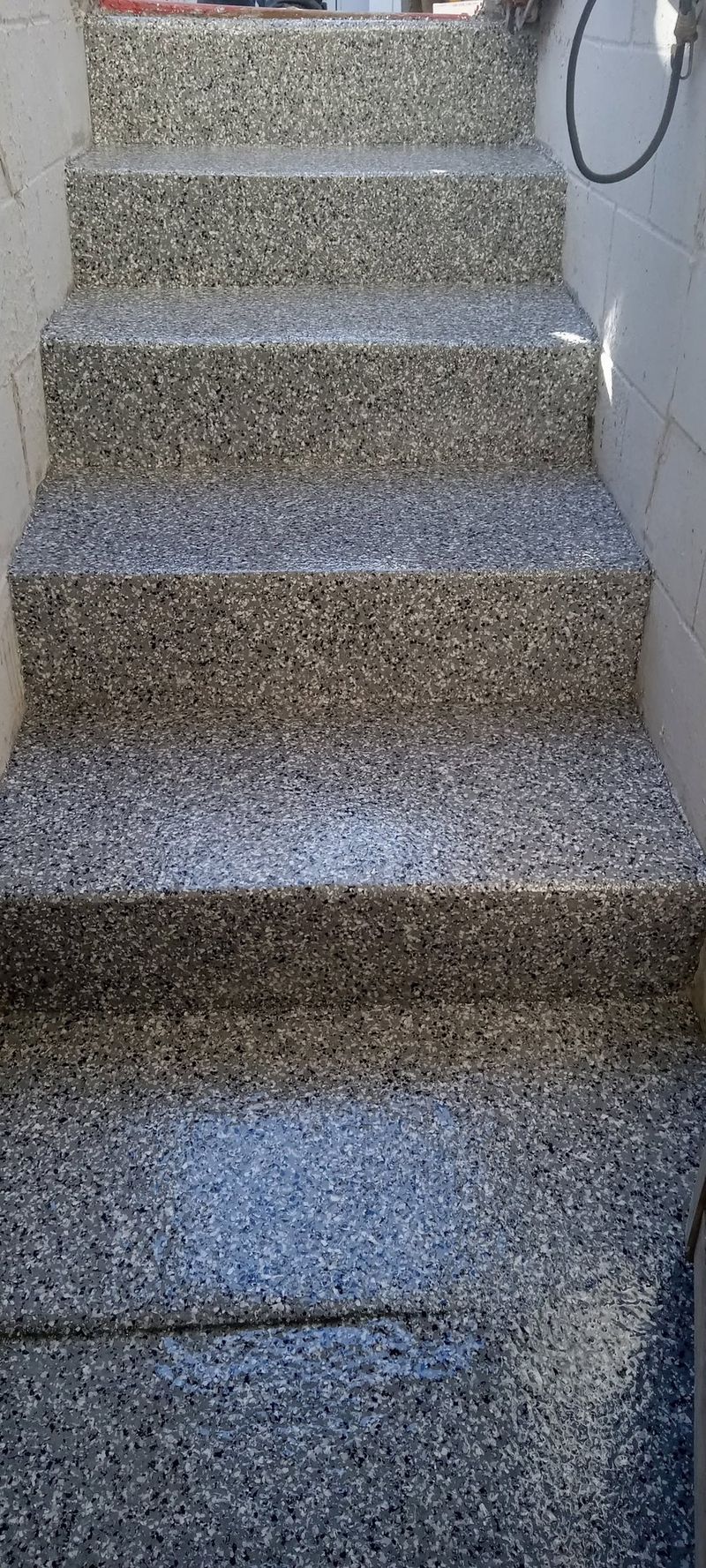
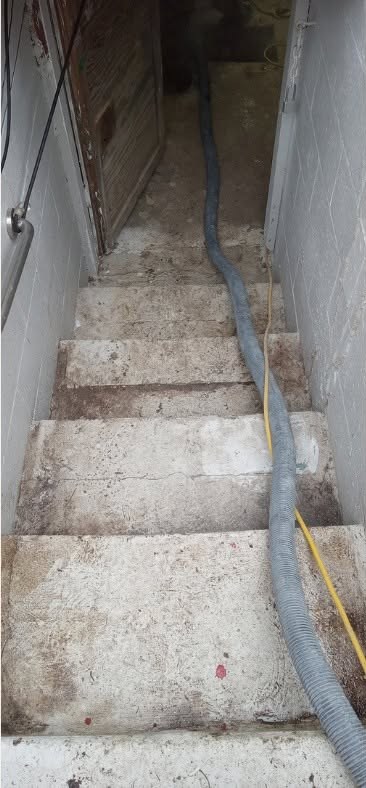
Drag the slider to see the same basement stairs before and after a flake coating. This is a real residential job — the bare concrete on the left, the sealed, grippy, finished stair on the right.
Basement stairs
Why Superior Floor Coatings
Why Homeowners Trust Us With Their Stairs
Superior Floor Coatings is based in Arthur, Illinois, and our focus is commercial and industrial floor coatings — shops, warehouses, plants and ag facilities that need a floor built for real traffic. We coat new construction and existing concrete, and we install epoxy resin cove base and wall coatings for spaces that need a seamless, washable surface.
We answer the phone Monday to Saturday, 6 AM to 9 PM. Call us at (217) 294-3979 and we'll walk you through it.
Questions
Stair & Step Coatings FAQ
Can you coat basement stairs and entry steps?+
Yes. We coat basement walkout stairs, entry steps, porches, landings, and commercial stairwells. The system is the same flake epoxy — treads, risers, and edges sealed as one continuous surface.
Will the coating make the stairs less slippery?+
We build a skid-resistant texture into the topcoat on every tread. Stairs see foot traffic and moisture, so grip is part of the system. We talk through how much grip the stair needs.
How do you handle the nosing and the edges?+
We coat the whole stair — tread, riser, and the nosing edge — as one continuous surface. The nosing gets the most wear, so it gets the most build, and the edge is sealed so water and salt do not get in.
Can you tie the stair coating into the floor coating?+
Yes. If the basement or garage floor is getting coated, we tie the stair coating into the floor system at the top and the bottom so the whole assembly is one continuous surface.
What about cracks in the concrete steps?+
We repair cracks and spalls as part of preparation before coating. Hairline cracks are bridged by the resin; wider cracks are routed, filled, and sealed so they do not telegraph through the coating.
How far do you travel for stair work?+
We serve homes within about 50 miles of Arthur. Larger commercial and industrial projects farther out: call to talk it through. Call us at (217) 294-3979.
Related services
Other Coated Surfaces We Install
Garage Floor Coatings
Decorative flake and solid epoxy garage floors that resist oil, salt and hot tires — and make the space usable again.
Basement Floor Coatings
Moisture-tolerant epoxy and flake systems that turn a bare concrete basement into a clean, bright, usable floor.
Commercial Epoxy Flooring
High-build epoxy systems for retail, office, restaurant and showroom floors that take daily traffic and still look sharp.
Service area
Stairs and Steps Across Central Illinois
Based in Arthur, IL, we serve homes, businesses and industrial facilities within about 50 miles. Larger commercial and industrial projects farther out: call to talk it through.
Ready to finish the stairs?
Tell us about the stairs, the traffic, and the weather they see. We'll match a skid-resistant flake system to the job.